
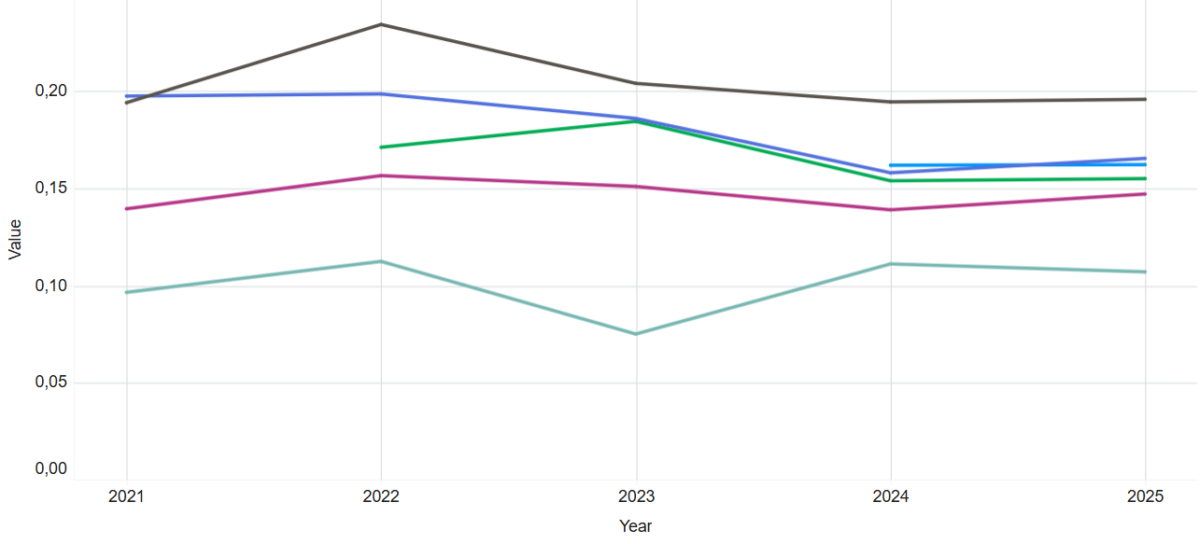
The Nordic-Baltic EMS Report 2026 presents emergency medical services data, quality indicators and benchmarking results from Denmark, Estonia, Finland, Iceland, Latvia, Lithuania, Norway and Sweden. The report provides a shared overview of EMS systems across the Nordic and Baltic region and supports benchmarking, quality improvement and collaboration between participating countries.
Read the full online publication:
https://nordichealthpreparedness.org/ems/
About the report
Emergency medical services operate in diverse environments across the Nordic and Baltic countries. Differences in geography, population density, healthcare organisation and service delivery create varying operational conditions, while the fundamental mission of providing timely emergency care remains shared across the region.
The Nordic-Baltic EMS Report 2026 brings together nationally aggregated information from Denmark, Estonia, Finland, Iceland, Latvia, Lithuania, Norway and Sweden. The report describes key characteristics of participating EMS systems and presents quality and benchmarking indicators using a common framework developed within the Nordic-Baltic EMS Network.
By collecting and analysing comparable information, the report aims to support mutual learning, strengthen collaboration and improve understanding of similarities and differences between EMS systems throughout the region.
The Nordic-Baltic EMS Network
The Nordic-Baltic EMS Network is a collaborative forum for national EMS representatives from participating countries. The network promotes the exchange of knowledge and experiences related to emergency medical services, quality improvement, benchmarking and research.
Cooperation began in 2013 and was formalised in 2014 through mandates provided by the participating countries’ national health authorities or equivalent organisations. Estonia joined the network in 2020, followed by Faroe Islands, Latvia and Lithuania in 2026, completing participation from all Baltic states.
Today, the network serves as a platform for collaboration between countries that share many common challenges while operating within different healthcare systems and organisational structures.
Benchmarking emergency medical services
Reliable and comparable information is essential for understanding how EMS systems perform and how services can continue to develop. The Nordic-Baltic EMS Network has therefore established a shared set of quality and benchmarking indicators that allow participating countries to compare selected aspects of emergency medical services using common definitions and methodologies.
The indicators cover operational performance, EMS utilisation, patient pathways and selected outcome measures. Together, they provide a common framework for examining EMS activity across countries while recognising the differences that exist in healthcare organisation, dispatch systems and service delivery models.
Rather than ranking countries, the purpose of benchmarking is to improve understanding, identify variation and support continuous quality improvement through shared learning.
Main observations from 2026 report
The comparison demonstrates substantial similarities in operational performance across participating countries. Dispatch reaction times and several other key operational indicators varied relatively little, suggesting broadly comparable performance across the region despite differences in geography and healthcare organisation.
More pronounced differences were observed in patterns of EMS utilisation. Emergency call rates, incidents and mission volumes varied considerably between countries, reflecting differences in healthcare systems, service organisation and population characteristics.
The report also identified variation in patient pathways following EMS assessment. Participating countries demonstrated different approaches to telephone advice and referral, hospital transport and the management of patients who were not conveyed to hospital.
In out-of-hospital cardiac arrest, rates of bystander cardiopulmonary resuscitation and return of spontaneous circulation were generally comparable across the region. These indicators continue to provide an important basis for understanding patient outcomes and supporting improvements in emergency care.
Participating countries
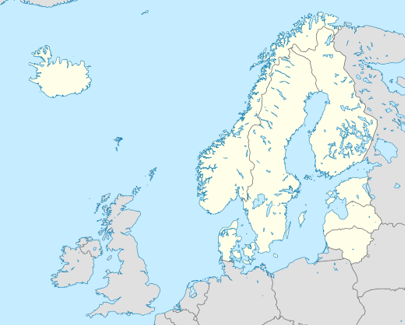
The report includes contributions from Denmark, Estonia, Finland, Iceland, Latvia, Lithuania, Norway and Sweden. Together, these countries represent a broad range of EMS models, healthcare structures and geographical conditions, creating valuable opportunities for comparative analysis and shared learning.
The continued expansion of the network with the addition of Latvia and Lithuania in 2026 and Faroe Islands as an observer has strengthened the ability to produce region-wide benchmarking information and to support cooperation between EMS systems across the Nordic and Baltic region.
Looking ahead
The continued development of common indicators, definitions and data collection methods remains a central objective of the Nordic-Baltic EMS Network. By improving comparability and expanding the evidence base available to participating countries, the network supports informed decision-making and long-term development of emergency medical services.
As cooperation continues to evolve, the annual report provides an important mechanism for monitoring trends, identifying areas for further investigation and strengthening collaboration between EMS systems throughout the region.
Read the full report
The complete online publication includes detailed descriptions of participating EMS systems, methodology, quality indicators and benchmarking results from all participating countries.
Read the Nordic-Baltic EMS Report 2026: https://nordichealthpreparedness.org/ems